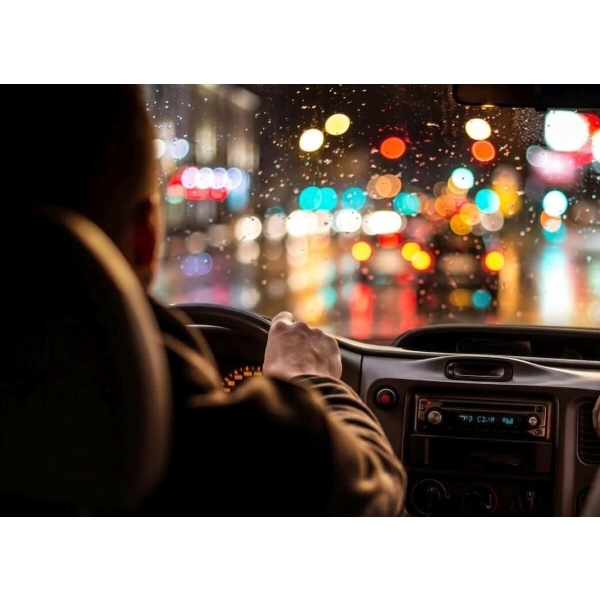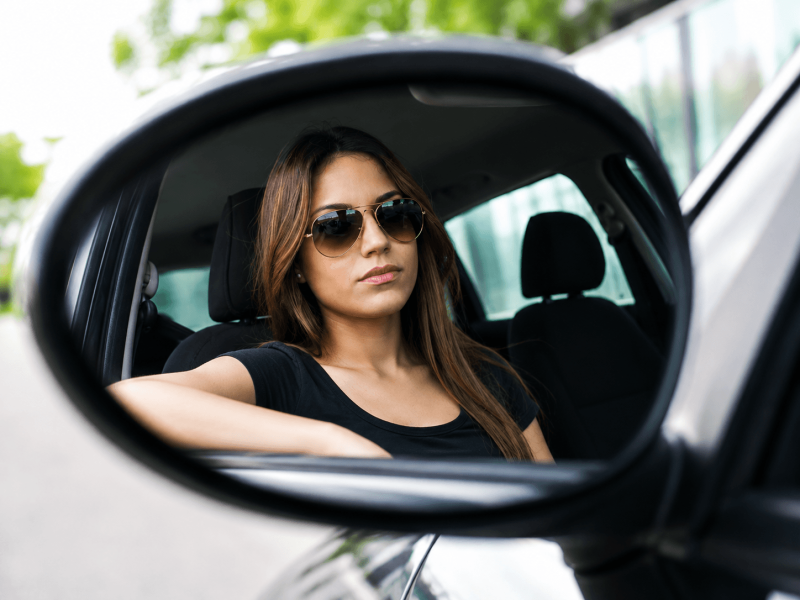
Imagine the perfect glasses: inside the office or at home, they are completely clear prescription glasses, and as soon as you step outside into the open air, they instantly transform into stylish sunglasses. This is the promise of photochromic lenses (also known locally as photo-solar lenses or "heliomatic").
For many people, however, their first drive with new photochromic glasses ends in disappointment. The sun is blazing right in your face, the road causes blinding glare, and your eyeglass lenses remain completely transparent. The first reaction of most drivers is: "My glasses are defective!" or "Photochromic technology doesn't work!".
In optics, we know the exact reason behind this. In this article, we will explain why standard photochromic lenses "refuse" to darken inside an automobile, what mistakes we make when choosing them, and what revolutionary new technologies finally solve this problem for drivers.
The Science Behind Photochromics: Why Does the Car Stop the Reaction?
To understand why lenses do not darken inside a vehicle, we need to look into how the technology itself functions.
Special photochromic molecules are embedded within the structure of photochromic lenses. When these molecules capture ultraviolet (UV) rays, they alter their chemical structure and begin absorbing light—meaning the lens darkens. When UV light disappears (for instance, when you walk indoors), the molecules revert to their initial state, and the lens becomes crystal clear again.
Where is the catch when driving?
The windshield of virtually every modern car (as well as the side windows on most newer vehicles) is made of laminated safety glass with a built-in UV filter. Automobile manufacturers do this for safety and protection—to prevent the vehicle interior from fading and to protect passengers' skin.
Because your car's windshield blocks nearly 99% of UV rays, ultraviolet light simply does not reach your photochromic glasses inside the cabin. Since the molecules lack the "trigger" to activate them, they remain in a resting state, and the lens stays completely transparent, even on the sunniest day of the year.
The Solution: Photochromic Lenses That WORK in the Car
Optical technology never stands still. To meet the needs of millions of drivers worldwide, leading manufacturers created a new category of products known as "Transitions XTRActive Photochromics for Driving".
How do they work?
These specialized lenses utilize a dual activation mechanism:
-
They react to UV light (like standard photochromics).
-
They also react to visible sunlight (brightness).
Because a car's windshield blocks UV rays but DOES NOT block visible bright light, these innovative lenses capture the intensity of light behind the wheel and darken up to around 50% - 70% inside the cabin! This provides superb visual comfort while driving, reducing road glare and blinding brightness.
Important to know: Indoors, these extra-activation lenses are not 100% transparent; instead, they carry a slight tint (around 10%), which further relaxes the eyes during computer work or under fluorescent lighting.
Photochromic vs. Prescription Sunglasses: What to Choose and When?
At Iris Optics, we are frequently asked which option is better. This question doesn't have a single definitive answer, because it depends entirely on your lifestyle:
-
Choose standard photochromics if: You want versatile "2-in-1" glasses for everyday life—walking, shopping, working in an office—and don't spend hours behind the wheel during the day.
-
Choose driver-specific photochromics (XTRActive) if: You drive regularly, constantly switch between outdoor and indoor spaces, and seek maximum eye protection all day long.
-
Choose classic prescription sunglasses (or Clip-on frames) if: You spend long hours at the beach, in the mountains, or drive long distances under intense summer sun. Polarized prescription sun lenses offer the deepest, most stable darkening that remains unaffected by temperature shifts.
Conclusion
If your old photochromic glasses failed you behind the wheel, it doesn't mean the technology is faulty—you were simply wearing a standard version not designed for the barrier of automotive glass.
Contemporary optics offers personalized solutions for every driver. Visit
FAQ – Frequently Asked Questions
Why do my photochromic glasses darken more in winter than in summer?
This is related to temperature. Photochromic molecules react not only to UV rays but also to heat. Cold weather (such as on a ski slope) allows the molecules to "lock" into a darkened state more easily, making the lens extremely dark. In very hot summer weather, thermal energy slows down the darkening process by roughly 10-15%.
Can photochromic lenses be combined with a Blue Cut filter for computers?
Yes, absolutely! Most modern new-generation photochromic lenses come with built-in blue light protection. They block harmful emissions from monitors and phones indoors, while protecting you from natural solar blue light outdoors.
Do photochromic lenses have polarization?
Standard photochromic lenses do not feature polarization. However, specialized hybrid lenses exist (such as Transitions Polar) that activate variable polarization as sunlight increases. They are the ultimate solution for eliminating glare from wet asphalt and water surfaces.
How many years does the photochromic effect last on lenses?
With proper care and cleaning, modern photochromic coatings maintain their speed and full functionality for between 2 and 4 years. After this period, the molecules gradually begin to lose their sensitivity, which is a natural process for organic materials.


-20%
photochromic
driving filter

-20%
photochromic
driving filter


-20%
photochromic
polarized
driving filter