When it comes to choosing new prescription glasses, most people spend hours picking out the perfect frame. It needs to fit their face shape, be in a trendy color, and express their personal style. But the truth is, the frame is just the packaging. The heart of your glasses—what actually determines how well you see and how protected your eyes are—is the eyeglass lenses.
In modern optics, lens selection is no longer limited to just the right diopter and thinning index. The most vital step toward perfect vision is choosing protective coatings. Customers often ask themselves: “Do I really need an anti-reflective coating?” or “Why pay more for a hydrophobic layer?”. In this article, we will do a detailed breakdown of the main coatings and explain why "naked" lenses without treatments are not only an uneconomical solution but can also worsen your visual comfort. All variants are available at blink.bg.
The Risks of "Naked" Lenses: Why Standard Plastic Is Not Enough
Decades ago, glasses were made of mineral glass, which was heavy but scratch-resistant. Today, over 95% of glasses are made of organic materials (special plastic), which are lightweight, safe, and impact-resistant. However, organic lenses have two major flaws in their raw state: they are extremely soft (scratch easily) and reflect too much light.
If you choose a "naked" lens without any coatings, here is what you will face:
-
Constant Glare: Up to 10% of light is reflected off the surface of the lens instead of passing through it to reach your eye. This creates a "mirror effect" that prevents people from seeing your eyes and fatigues your vision.
-
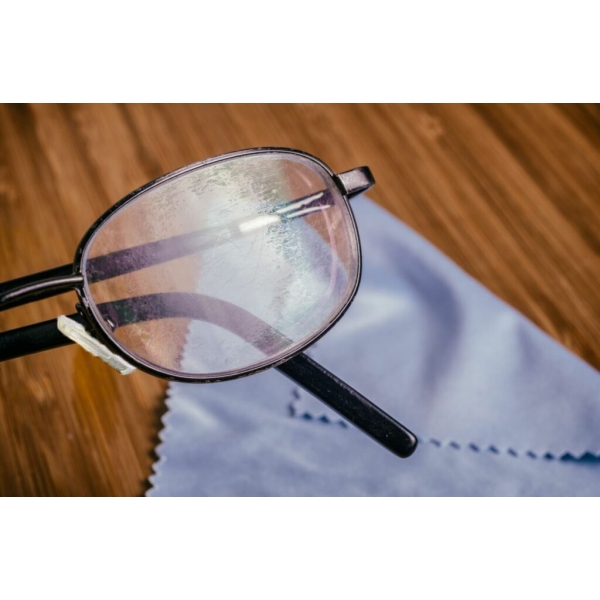
Quick Scratching: After just a few weeks of wiping with a t-shirt or cloth, microscopic scratches will appear on the lens, bending light incorrectly and blurring your view.
-
Difficult Cleaning: Smudges from fingers, raindrops, and dust stick instantly to the surface and smear, requiring constant cleaning.
To address these problems, manufacturers create high-tech layers applied molecularly to the lens. Let's look at the three most important ones.
1. Hard Coating: The Armor Against Scratches
Hard coating is the foundation of any quality prescription lens. Since organic material is soft, an extremely thin, clear lacquer layer is applied to both surfaces of the lens, which is then hardened through thermal or UV treatment.
Why is it necessary?
This coating does not make the lens completely indestructible, but it drastically increases its resistance to daily wear and tear. Thanks to it, your glasses won't scratch from accidental rubbing in the case or during cleaning. Hard coating ensures a long life for your investment—without it, your lenses would become unusable in less than a year.
2. Anti-Reflective (AR) Coating: The Key to Crystal Vision
The anti-reflective coating is perhaps the most popular and critical treatment in modern optics. It consists of multiple microscopic layers of metal oxides that literally "catch" light reflections and allow them to pass freely through the lens. When a lens has a quality anti-reflective coating, it looks almost invisible.
Advantages during driving and screen work:
-
During night driving: It eliminates dangerous "halos" and glares around the headlights of oncoming cars and streetlights. This reduces reaction time and prevents blinding.
-
In front of the computer: It reduces visual fatigue caused by artificial light from monitors and fluorescent office lighting.
-
Aesthetics: Since the lens doesn't reflect light like a mirror, people opposite you see your eyes clearly, which is exceptionally important during business meetings and photos.
3. Hydrophobic and Oleophobic Layer: Cleanliness in One Motion
Even if your glasses are durable and glare-free, they won't do their job if they are constantly smudged. This is where hydrophobic (water-repellent) and oleophobic (oil-repellent) coatings come to the rescue. These are the outermost layers of the lens, making it extremely smooth on a microscopic level.
How does it work in daily life?
-
In rain and humidity: Water droplets do not smear across the lens surface; instead, they roll into perfect little beads and simply slide down.
-
Anti-fogging: When entering a warm room from the cold, the lenses clear up multiple times faster compared to "naked" plastics.
-
Easy cleaning: Skin oils and fingerprints cannot "grip" the lens. Cleaning requires just a light motion with the microfiber cloth from blink.bg, without needing heavy pressure that could scratch the surface.
All in One: Modern Multi-Layer Packages
In the past, customers had to choose each coating separately. Today, leading manufacturers offer ready-made premium packages that include all these treatments in one, along with an anti-static layer (which prevents dust from sticking to the glasses).
When you choose prescription glasses in our online optics shop, you get access to latest-generation lenses that combine a hard coating, a perfect anti-reflective layer, and an ultra-smooth hydrophobic filter. For people who spend over 6 hours in front of screens, we recommend upgrading these packages with a Blue Cut filter against blue light.
Why Invest in Coatings from blink.bg?
At blink.bg, we do not compromise on the quality of your vision. We believe that cheap in the beginning turns out expensive in the end. Glasses with "naked" lenses require much more frequent replacement and cause hidden strain and headaches due to low light transmission.
Investing in quality coatings for your eyeglass lenses provides you with:
-
Visual Health: Your eyes do not get strained from unnecessary reflections.
-
Durability: Glasses that look like new even after months of intensive use.
-
Comfort: Less time spent cleaning, and better performance during driving and working.
Explore our frame offers and consult with our opticians for the best coating package for your lifestyle at
FAQ
Can lens coatings wear off or peel over time? If the lenses are high-quality and made in a certified laboratory, the coatings are molecularly bonded to the lens and will not peel off on their own. This can only happen with improper maintenance—for example, if you clean your glasses with harsh chemicals (like acetone or alcohol) or leave them in high temperatures (on the car dashboard in summer).
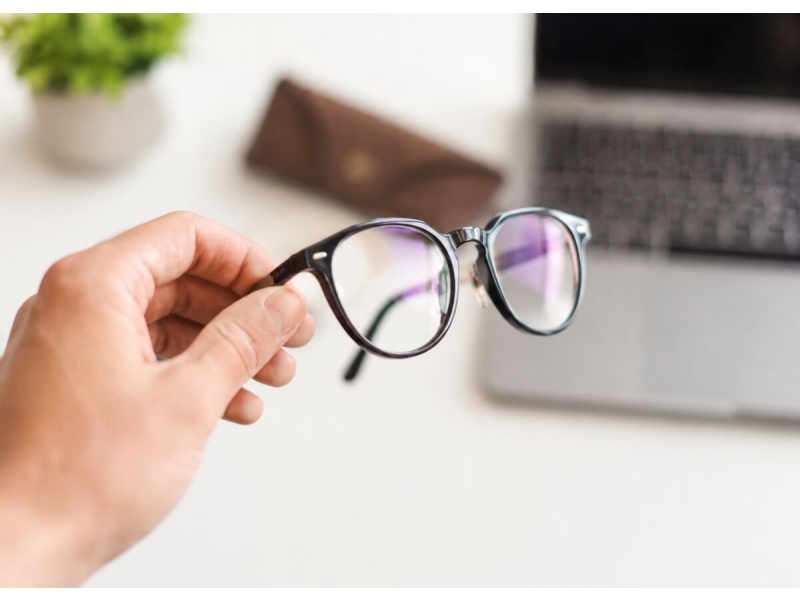
How can I tell if my glasses have an anti-reflective coating? When you look at the lens at an angle toward a light source, the residual reflection of the anti-reflective coating has a specific slight color—usually green, blue, or violet. If the reflection is pure white (like in a regular window glass), your glasses do not have an anti-reflective coating.
Are these coatings suitable for kids' glasses? They are absolutely mandatory for children! Since kids are very active and often drop their glasses, the hard coating is critical for their durability. The anti-reflective coating helps children see the blackboard in school clearly, without blinding glares from classroom lighting.
Is there a difference between a hydrophobic coating and anti-fog glasses? The hydrophobic layer helps the lens clear up much faster and prevents water droplets from staying on it. However, it does not prevent the initial condensation of moisture during sudden temperature changes. For complete anti-fog protection, specialized anti-fog sprays or cloths are used additionally.