In the summer, a car can easily turn into a furnace, while in winter, it acts like a freezer. While driving, sunglasses and prescription glasses are indispensable accessories. However, left on the dashboard or in the glove box, they are subjected to extreme temperature challenges. Many drivers and passengers do not realize that leaving their glasses in the car can irreparably damage them in just a matter of hours.
Here is exactly what happens to frames and lenses under the influence of temperatures inside a vehicle.
1. Cracking and Peeling of Lens Coatings
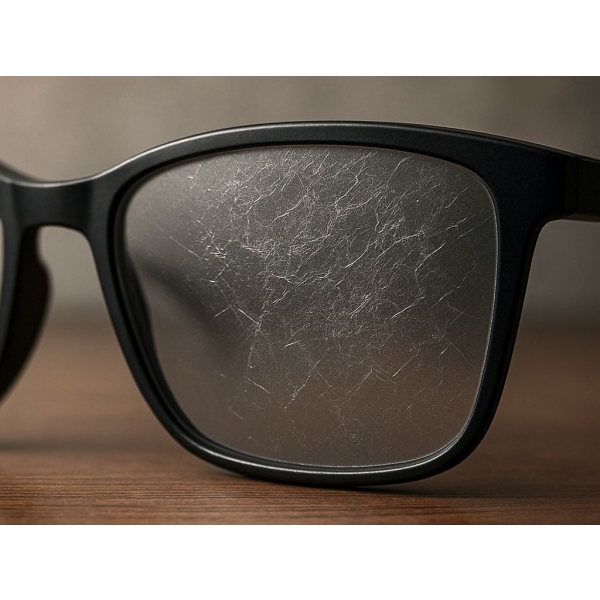
Modern prescription and sunglasses feature multiple microscopic coatings—anti-reflective, anti-scratch hard coats, UV filters, and mirror layers. Each of these layers expands at a different rate when heated.
How it happens:
-
When the interior temperature of a car reaches 60°C (140°F) or more on a hot summer day, the outer coatings undergo systematic thermal shock.
-
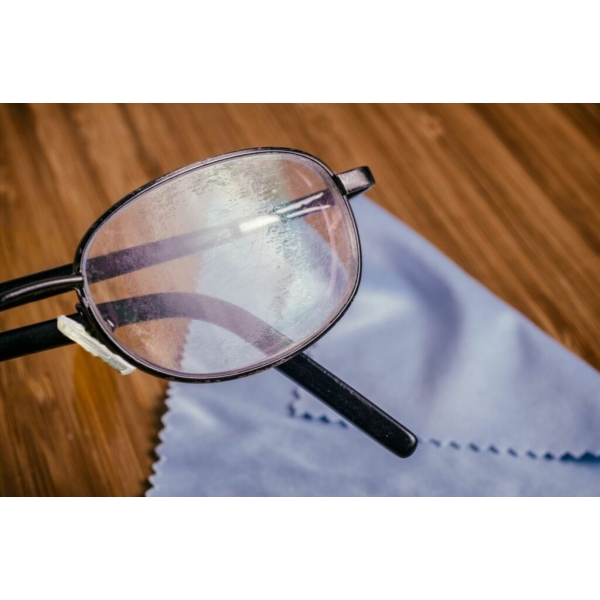
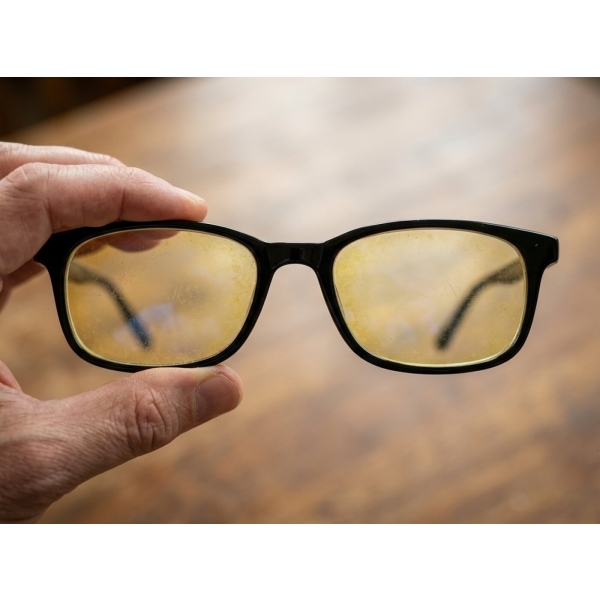
This leads to the appearance of spider-web micro-cracks on the lenses, which often look like a smudge that cannot be wiped away. Over time, the anti-reflective layer begins to peel or craze.
Solution and prevention:
-
Always store your glasses in a hard protective case when leaving the vehicle.
-
Never leave glasses in direct sunlight on the dashboard or the rear deck.
2. Melting, Warping, and Loss of Frame Elasticity
The materials used to manufacture eyeglass frames are extremely sensitive to heat and cold.
How it happens:
-
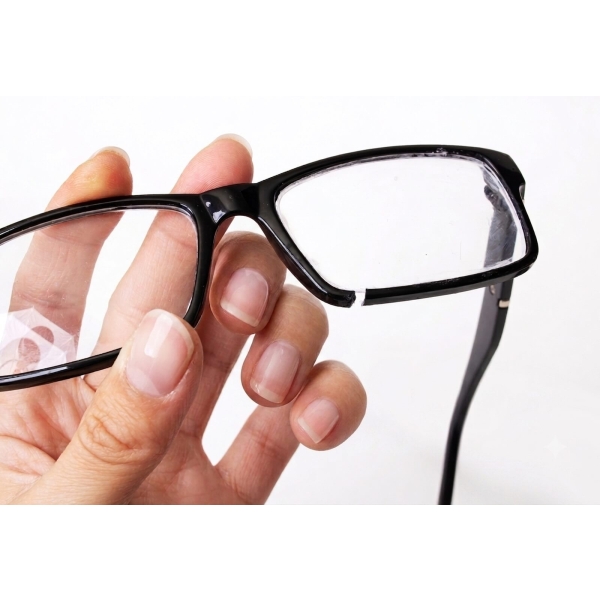
Plastic and Acetate frames: At high temperatures, these materials soften, lose their original shape, and expand. The frame twists, the lenses begin to rattle in the rims or even fall out. When the material cools in a deformed state, the glasses become impossible to wear and no longer fit the face correctly.
-
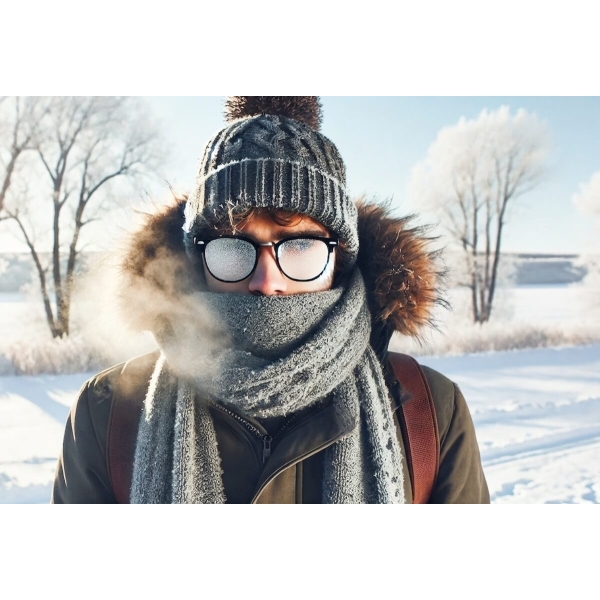
Plastic in cold weather: In winter, the plastic becomes extremely brittle. A careless grip or an attempt to clean the lenses when they are frozen can lead to an instant snap of the temple or frame.
Solution and prevention:
-
Choose frames with higher thermal resistance or titanium frames if you frequently need to leave them in extreme environments (though the lenses remain vulnerable).
-
Always carry your glasses with you in a bag or pocket.
3. Damage to Polarized Filters
Polarized sunglasses are excellent for driving, as they eliminate glare from asphalt and other cars, but they are particularly sensitive to heat.
How it happens:
-
The polarizing film is actually a thin optical layer sandwiched between lens layers or applied as a special film on the surface.
-
High temperatures degrade the adhesive between the layers or cause the film itself to shrink unevenly. This leads to the appearance of color spots, image distortion, and total loss of the polarizing effect (the view starts to look "smeared" or distorted).
Solution and prevention:
-
Keep polarized glasses away from car heaters in winter and away from direct sunlight in summer.
4. Risk of Thermal Fire (The Magnifying Glass Effect)
While less common, this risk is entirely real and can threaten the safety of the entire vehicle.
How it happens:
-
Sunglasses with prescriptions or significant curvature (especially those with high plus power) act as optical lenses that focus sunlight into a single point.
-
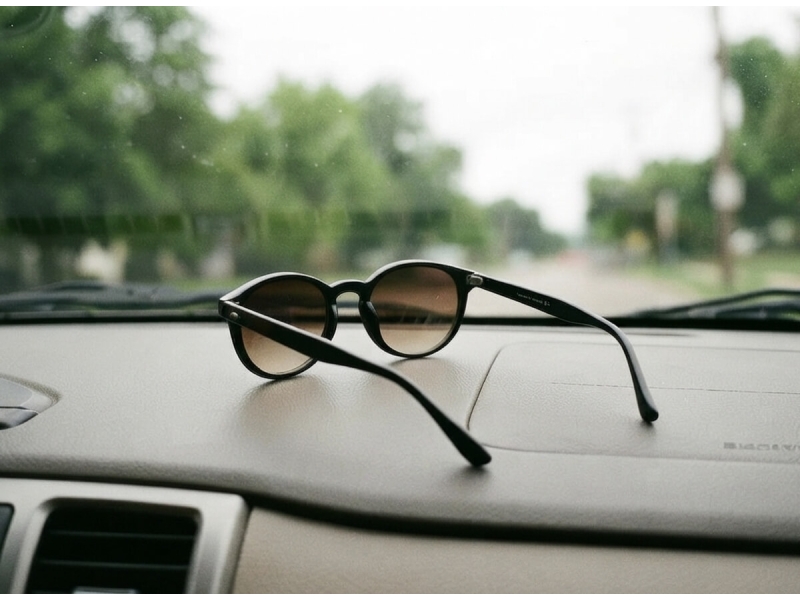
If you leave glasses on the dashboard or a seat in the sun, the focused beam of light can heat upholstery, plastic, or paper to the point of ignition.
Solution and prevention:
-
Use sunshades for the windshield when parking in the sun, and always tuck your glasses away in the glove box or a case.
A car is one of the worst places to store eyewear due to constant temperature fluctuations. Even a single hot summer day can irreversibly destroy your favorite sunglasses or expensive prescription glasses. Make it a habit to take your glasses with you every time you leave your vehicle.
Frequently Asked Questions (FAQ)
1. Can eyeglass lenses melt from the heat in a car?
The lenses themselves rarely melt completely, but the microscopic coatings on them crack, peel, and deform. With cheap plastic lenses, optical distortion is also possible.
2. Why do my lenses look cracked after leaving them in the car during summer?
This is caused by thermal shock and the different expansion rates of various protective layers (antireflective, UV filter, hard coat). Heat causes the layers to expand at different speeds, creating micro-cracks.
3. Is it safe to leave glasses in the car's glove compartment?
The glove box is slightly cooler than directly on the dashboard under the windshield, but temperatures there still rise significantly in summer. The safest option is to take your glasses with you or keep them in a hard case in a shaded spot.
4. Can a heat-warped frame be repaired?
If the frame is plastic or acetate and only slightly warped, an optician can carefully heat it and restore its original shape. However, if the material has lost its elasticity or cracked, correction is not possible.