Choosing new glasses is an exciting process that begins with finding the perfect frame. However, the real magic happens when selecting the lenses. If you have a higher prescription, you’ve likely heard the term "thinning." To many, this sounds like a cosmetic add-on, but in reality, thinning is a key technological process that determines how light, comfortable, and visually appealing your eyeglass frames will be. In this article, we will look in detail at what the refractive index is and why it is so important for your new prescription glasses.
What is the Refractive Index?
At the heart of thinning is a physical parameter called the "refractive index." This index measures the material's ability to bend light. The higher the index, the more efficiently the material bends light rays.
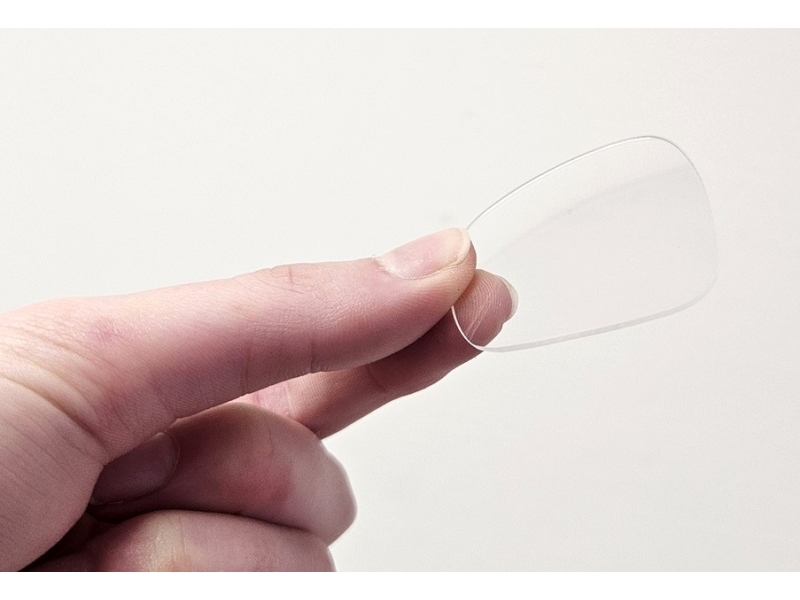
For the consumer, this means the following: to achieve a specific prescription, a high-index material requires less "matter" (lens thickness) than a standard material. The result is a lens that is significantly thinner and lighter, even though it corrects the same prescription. In the world of optics, the standard index is 1.50, while thinned lenses reach levels of 1.60, 1.67, and even 1.74.
The Advantages of Thinned Lenses
The primary advantage, of course, is aesthetics. With higher prescriptions (especially for nearsightedness), standard lenses become very thick at the edges. This creates the so-called "bottle effect," which can ruin the look of even the most expensive designer frame. Thinning allows the lens to stay within the boundaries of the frame without protruding awkwardly.
The second, but equally important factor, is weight. Heavy prescription glasses apply pressure to the nose and can cause discomfort or headaches after several hours of wear. Thinned lenses are up to 30-40% lighter than standard ones, making them ideal for all-day use. When you combine lightweight eyeglass frames with high-index lenses, you get an accessory that you barely feel.
When is Thinning Absolutely Necessary?
Not every prescription requires the highest level of thinning. Here is a brief guide on which option is most suitable:
-
Prescriptions up to +/- 2.00: Here, the standard 1.50 index is usually perfectly sufficient. The lenses are relatively thin and light by nature.
-
Prescriptions from +/- 2.25 to +/- 4.00: A 1.60 index thinning is recommended. This makes the lenses about 20% thinner and significantly stronger (the 1.60 material is more elastic and suitable for semi-rimless or rimless frames).
-
Prescriptions from +/- 4.25 to +/- 6.00: A 1.67 index is the optimal choice here. It offers a drastic reduction in thickness and weight while eliminating peripheral distortions.
-
Prescriptions above +/- 6.00: For these values, a 1.74 index is mandatory to achieve an acceptable aesthetic look and comfort.
The Relationship Between Thinning and Frame Selection
The type of frame you have chosen largely dictates the required index. If you have opted for thick plastic eyeglass frames, they can "hide" more edge thickness. However, if you prefer fine metal frames or rimless models, the lens thickness will be fully visible. In such cases, even for lower prescriptions, it is better to go with a higher index to preserve the elegance of the design.
At blink.bg, we always advise our customers to also pay attention to the lens diameter. Correct centering relative to your pupillary distance can further help reduce edge thickness if the lens is cut from an optimal blank size.
Optical Distortions and Aspheric Design
It is important to note that thinned lenses often come with a so-called "aspheric design." Standard lenses have a spherical surface, which at high prescriptions can make eyes look unnaturally large (farsightedness) or very small (nearsightedness). Aspheric thinned lenses are flatter, which reduces these visual distortions and makes your gaze look more natural behind your prescription glasses.
Investing in Quality
Although thinned lenses are more expensive than standard ones, they are a long-term investment in your health and self-confidence. Combined with high-quality anti-reflective coatings, they provide a clearer image and fewer glares. When you buy prescription glasses, you are buying comfort for your eyes for the next few years. The quality of vision and the lightness of the frame are factors you feel every day.
In conclusion, "thinning" is not just a cosmetic trick but a necessity for anyone looking for a balance between perfect vision and a modern look. At Iris Optics and blink.bg, we have the most advanced measurement and consultation technologies to ensure your new eyeglass frames are equipped with the best possible lenses.
FAQ – Frequently Asked Questions
Are thinned lenses easier to scratch? The high-index material itself isn't softer, but because it is more expensive, we always recommend applying a high-grade hard coating and anti-reflective treatment. In fact, materials like 1.60 are tougher and more resistant to breakage than standard ones.
Can I put standard lenses in a rimless frame? It is not recommended. The standard 1.50 material is brittle. When drilling holes for the screws, it can easily crack. For rimless frames, thinned materials (minimum 1.60 index) are always used as they are more elastic and durable.
If I have a low prescription, is it worth paying for thinning? If your prescription is below +/- 2.00, the difference in thickness will be almost unnoticeable. It would only make sense if you are looking for greater material strength or if your frame requires specific elasticity.
What is the difference between the 1.67 and 1.74 index? The 1.74 index is the thinnest plastic lens on the market. It is about 10-15% thinner than the 1.67. It is mainly recommended for prescriptions above +/- 6.00, where every fraction of a millimeter matters for the final result.
Does color perception change with thinned lenses? At very high indices, a slight increase in "chromatic aberration" (minor color fringing in peripheral vision) might be observed. However, modern manufacturers successfully minimize this effect through precise lens design.